EU and India Sign Landmark Free Trade Agreement
Deal ends nearly 19 years of talks and will liberalize about 99% of India’s exports by value, creating a $27 trillion market for roughly 2 billion people.
 CBS News
Are Trump's tariffs fueling a boom in trade deals for China and India?

 Boston Herald
The EU is seeking new trade partnerships. Here’s why

 New York Daily News
The EU is seeking new trade partnerships. Here’s why

 Al Jazeera
‘Mother of all deals’: How India-EU trade deal creates $27 trillion market
Overview
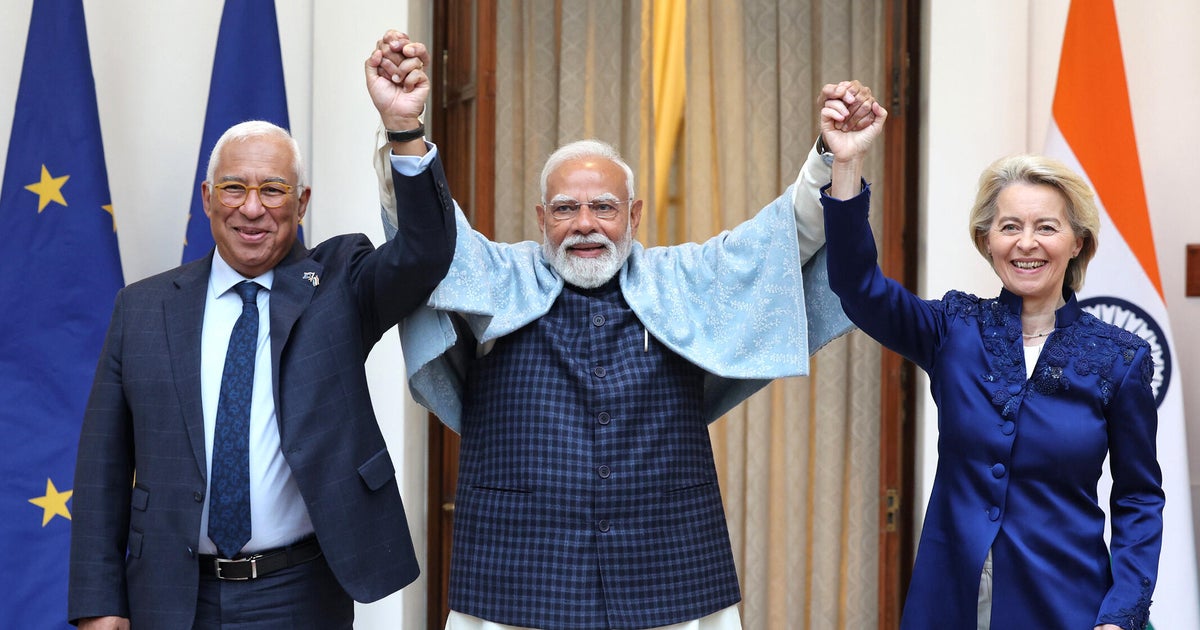
Indian Prime Minister Narendra Modi and European Commission President Ursula von der Leyen announced Jan. 26, 2026 that India and the European Union signed a free trade agreement that will liberalize about 99% of Indian shipments by value and create a combined $27 trillion market for roughly 2 billion people, officials said.
The pact ends nearly 19 years of intermittent negotiations and comes as countries pursue new bilateral deals amid U.S. tariff measures, including a 50% levy on some Indian goods imposed last year, a development analysts said helped accelerate talks.
Prime Minister Narendra Modi called the agreement "historic" and European Commission President Ursula von der Leyen hailed it as the "mother of all deals" at the New Delhi signing, while U.S. Treasury Secretary Scott Bessent said on ABC News that the pact undermines U.S. tariff policy and "finances Russia's war," reflecting competing views among major powers.
The deal will immediately remove Indian tariffs on about 30% of EU goods and cut or eliminate duties on 96.6% of EU exports to India, and it will slash Indian tariffs on some European autos from as high as 110% to 10%, trade officials said.
The accord still requires legal scrubbing in Brussels and New Delhi and ratification by the European Parliament and EU member states before implementation expected early next year, with outstanding disputes over dairy, cereals and sugar to be resolved by June 30, officials said.
Analysis
Center-leaning sources frame the story as a backlash to U.S. tariff-driven unpredictability, emphasizing Trump's tariffs as a catalyst for new deals. Editorial choices—leading with the EU‑India accord, using evaluative paraphrases (e.g., "disruption," "self-proclaimed king of the deal") and foregrounding European leaders' celebratory statements—create a collective narrative of U.S. destabilization prompting strategic realignments.