Delcy Rodríguez Signs Law Opening Venezuela’s Oil Sector to Private Firms
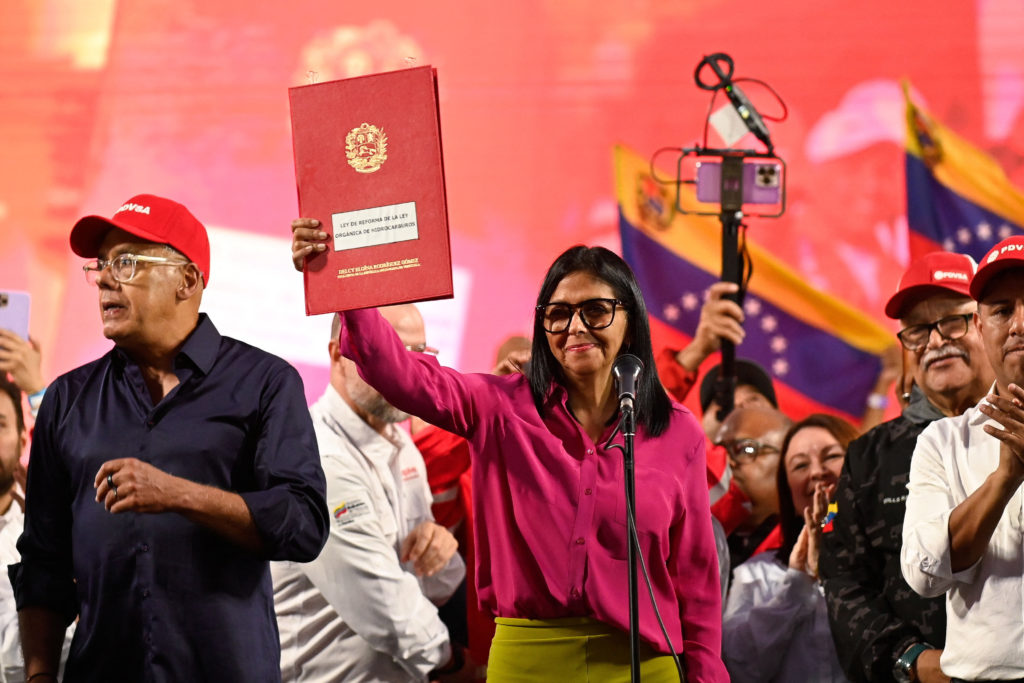
Acting President Delcy Rodríguez signed a hydrocarbons reform allowing private management and arbitration while the U.S. eased oil sanctions.

 Daily Caller
Venezuela Opens Oil To Private Investors
 PBS NewsHour
Venezuela’s acting president signs overhaul easing state control of oil industry into law

 CNN
CNNVenezuelan lawmakers approve new law opening oil industry to foreign companies

 Epoch Times
Venezuela Approves Oil Law Reform to Ease State’s Grip and Lure Private Investors
Overview
Acting President Delcy Rodríguez signed the hydrocarbons reform into law after the National Assembly approved it earlier the same day, allowing private firms to manage oilfields and permitting independent arbitration, officials confirmed.
The law reverses two decades of state control established under Hugo Chávez and was passed amid the Jan. 3 U.S. seizure of former President Nicolás Maduro, a context that U.S. and Venezuelan officials link to expedited reforms.
The U.S. Department of the Treasury simultaneously issued a general license easing oil sanctions and authorizing certain U.S. companies to engage in exports and transport, a move that excludes entities from China, Russia, Iran, North Korea and Cuba, treasury records show.
Opposition lawmaker Antonio Ecarri called for transparency and judicial guarantees to curb corruption, while ruling-party lawmaker Orlando Camacho hailed the reform as transformative for the economy, reflecting contested views in the Assembly.
Analysts note Venezuela has the world's largest proven crude reserves and the law caps royalties at 30 percent and allows the executive branch to set project percentages, while companies like ExxonMobil and ConocoPhillips still hold unresolved arbitration claims.
Analysis
Center-leaning sources frame the story as a market-oriented pivot enabled by U.S. policy, highlighting privatization, sanctions relief and foreign-investor assurances. Editorial choices use loaded terms ('brazen seizure', 'self‑proclaimed socialist movement'), link Treasury actions to the law’s passage, and foreground mismanagement and investment potential while treating transparency concerns as secondary.