Scientists Date Indonesian Hand Stencil to 67,800 Years
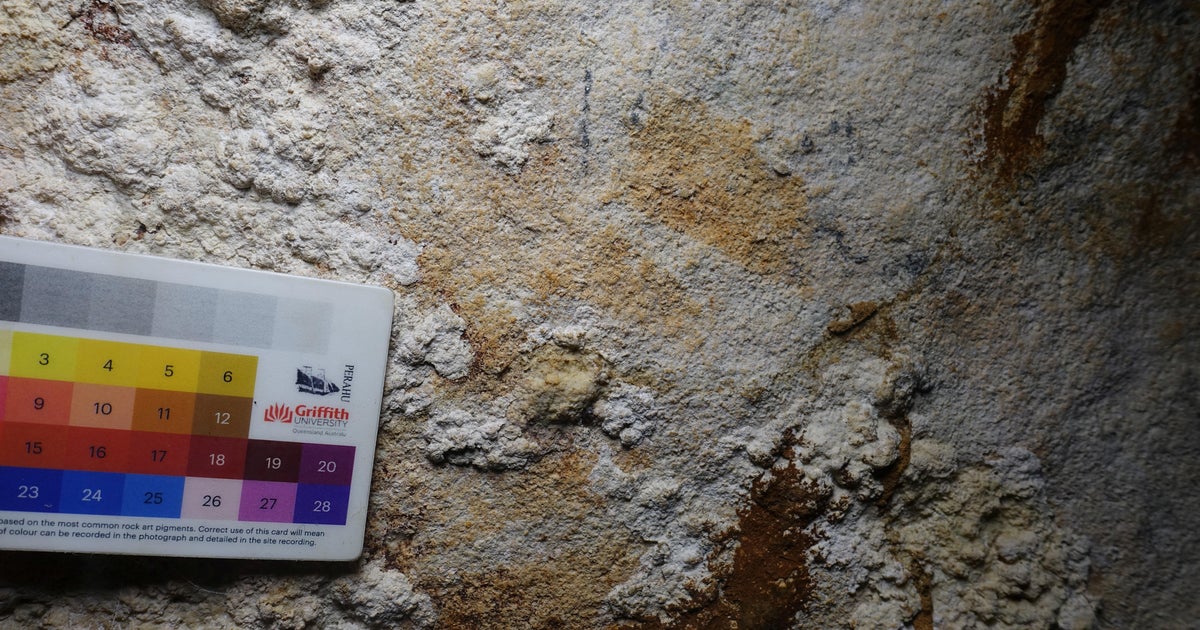
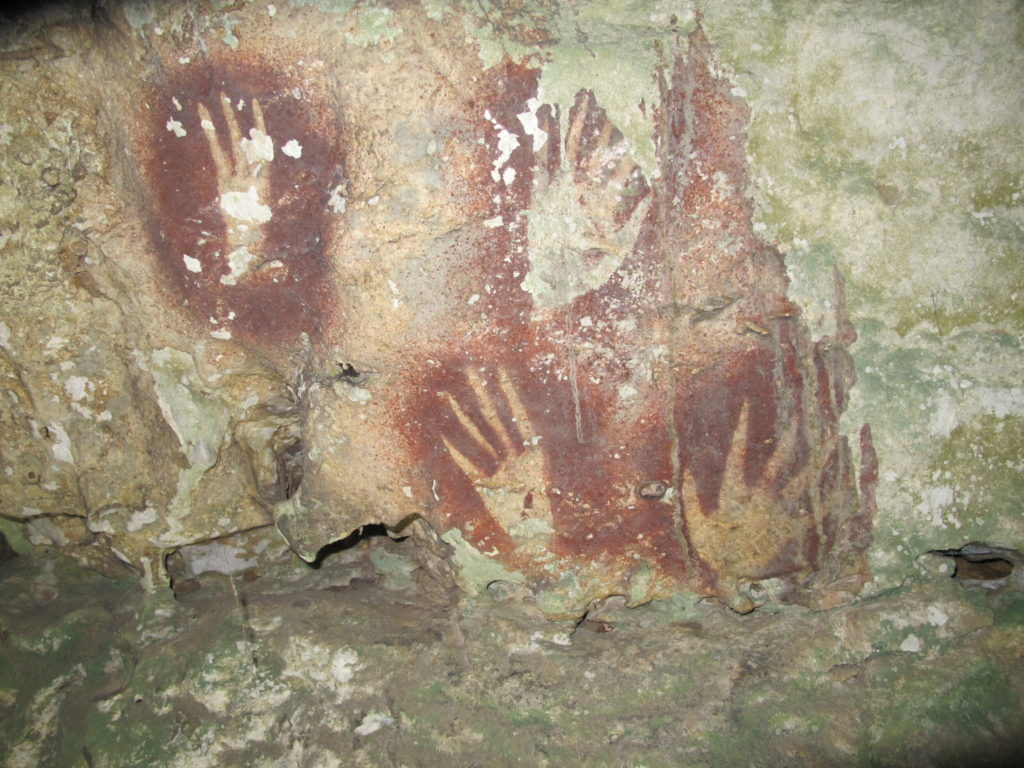
hand stencil in a Sulawesi cave is at least 67,800 years old, researchers report.

 Boston Herald
Indonesian handprints are the oldest cave art found yet
 CBS News
World's oldest cave art — the outline of a human hand — discovered in Indonesia, scientists say
 PBS NewsHour
These handprints may be the oldest cave art found yet

 CNN
CNNFaded hand shape in Indonesian cave may be world’s oldest rock art
Overview
LEAD: Indonesian and Australian researchers led by Maxime Aubert of Griffith University dated a red hand stencil in Liang Metanduno cave on Muna Island, southeast Sulawesi, to a minimum age of 67,800 years using uranium-series analysis of five-millimeter calcite crust samples, the team reported Wednesday in the journal Nature.
CONTEXT: The minimum age makes the outline the oldest known cave-wall art yet identified and challenges narratives that symbolic image making began in Ice Age Europe, while earlier South African engravings dated to about 73,000 years ago are not cave-wall pigments and have different preservation contexts, the study and independent experts noted.
RESPONSE: Reactions were mixed, with co-author Adhi Agus Oktaviana of Indonesia's BRIN saying the finding supports a northern-route presence of modern humans in Wallacea, paleoanthropologist Genevieve von Petzinger saying she 'let out a little squeal of joy,' and Durham University's Paul Pettitt cautioning via email that uranium-series minimum ages date overlying calcite rather than pigment and that further analysis is needed.
SCALE: The research team surveyed 44 sites in southeastern Sulawesi, securely dated 11 rock-art motifs including seven hand stencils, documented intermittent artistic activity at Liang Metanduno spanning at least 35,000 years, and recorded other motifs in the same caves painted as recently as about 3,500 to 4,000 years ago, the study reported.
FORWARD: The researchers, including co-leaders Maxime Aubert and Adam Brumm, said they plan expanded surveys of nearby Wallacean islands and additional uranium-series and archaeological work in coming field seasons to test migration models and investigate whether the stencils were created by Homo sapiens, Denisovans or another hominin group, the team said.
Analysis
Center-leaning sources frame the Sulawesi handprints as overturning a Eurocentric ‘creative explosion’ narrative, highlighting early symbolic behavior and implications for human dispersal. They foreground expert interpretation and comparative finds while downplaying methodological disputes and alternative readings, producing a cumulative story that emphasizes innate human creativity and broader geographic origins.