Canada Forges Controversial Energy Agreement with Alberta to Boost Oil Exports and Diversify Economy
Prime Minister Mark Carney and Alberta have struck an energy agreement to build a Pacific pipeline, aiming to diversify oil exports and reduce reliance on the U.S., despite significant political opposition.
 BBC News
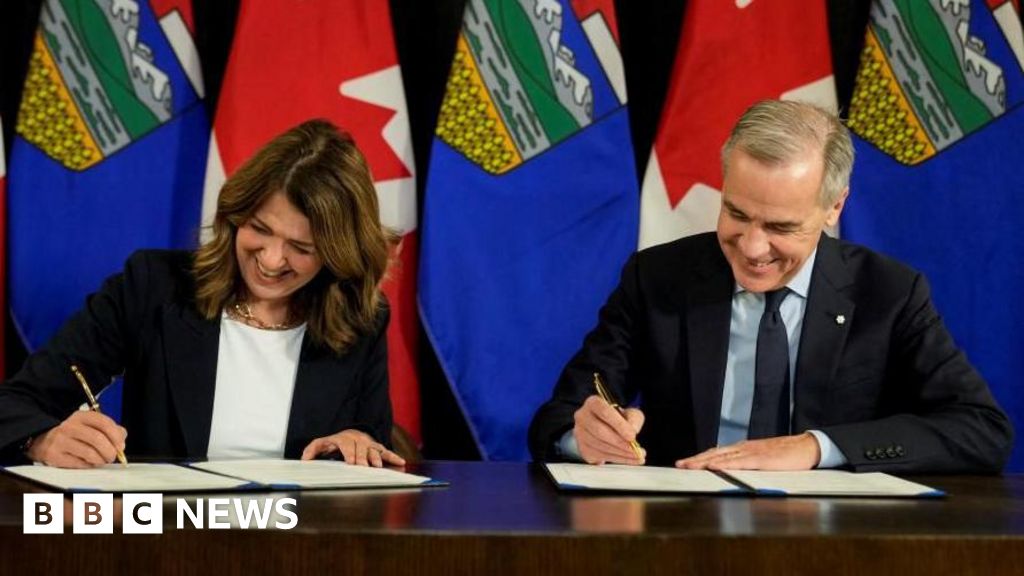
Carney's new Alberta oil pipeline deal already faces opposition
 ABC News
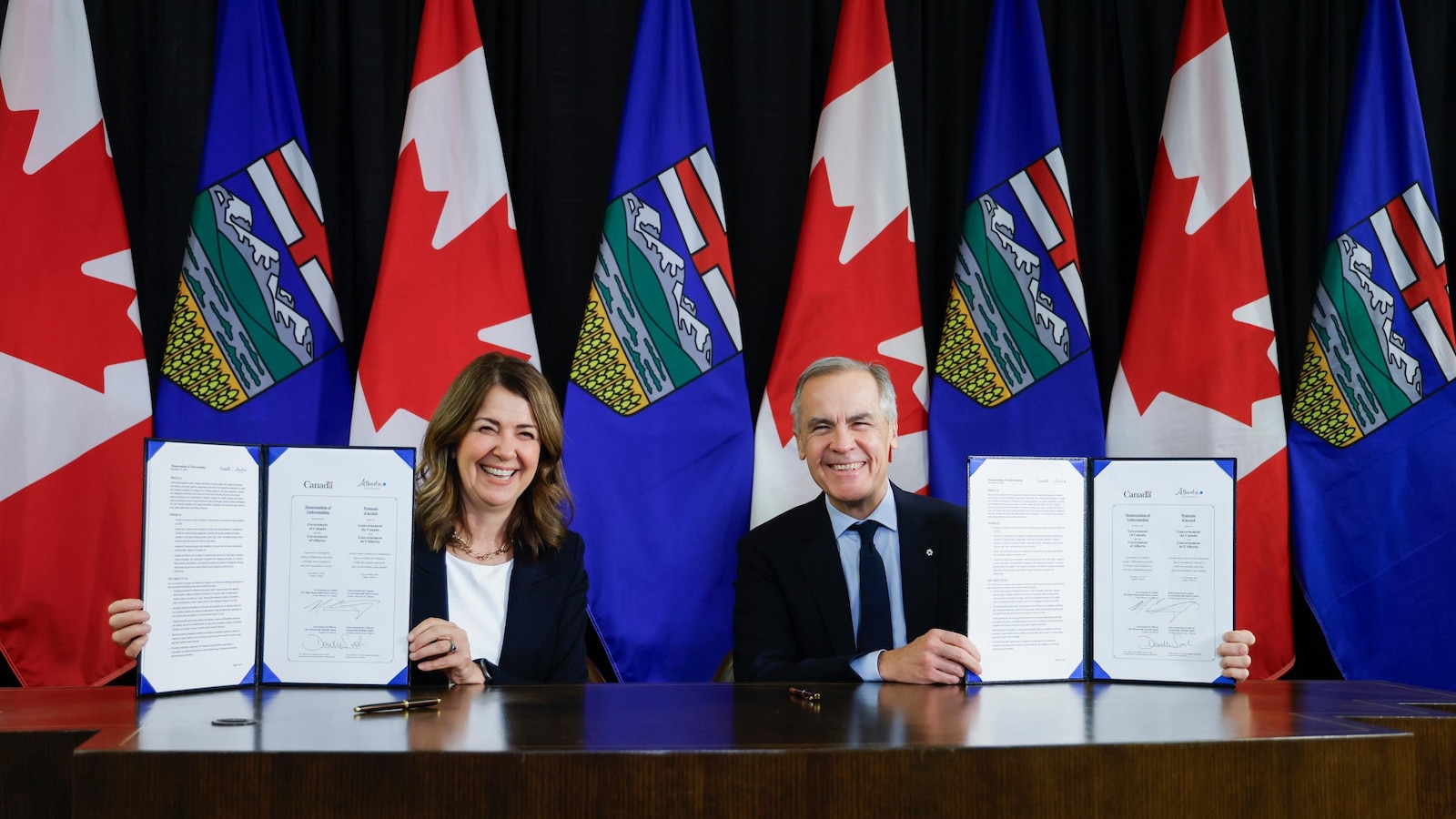
Canada's prime minister and Alberta's premier sign pipeline deal

 The Guardian
Canada minister resigns from cabinet over Carney’s controversial oil pipeline deal
 Epoch Times
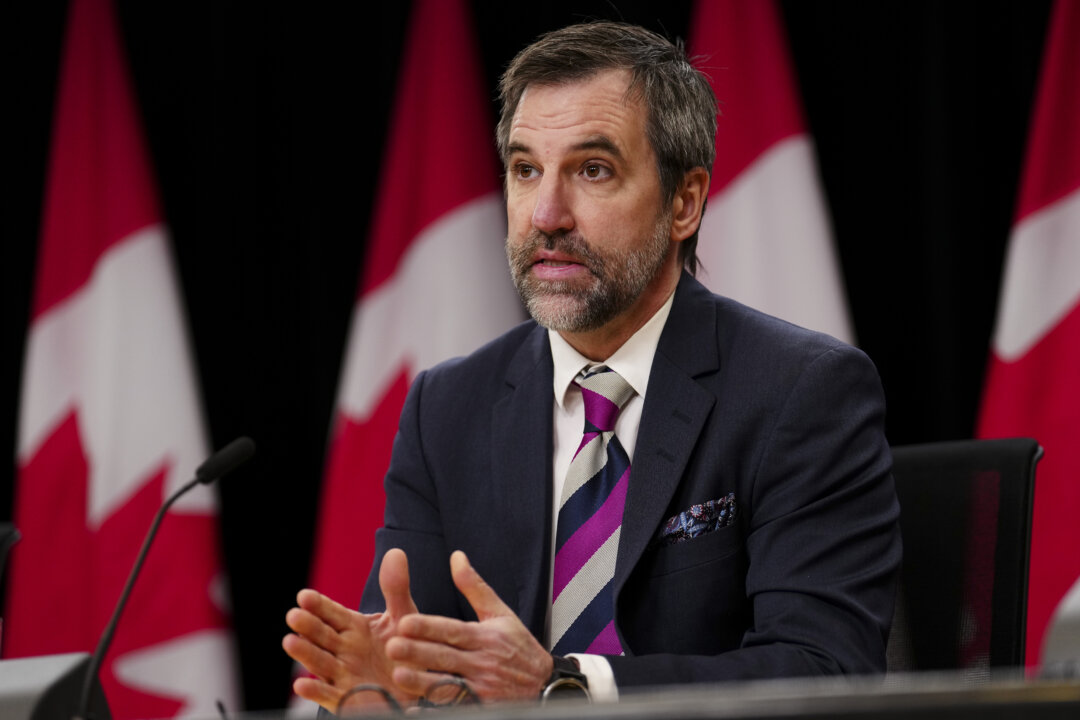
Guilbeault Quits Carney’s Cabinet Over Ottawa-Alberta Energy Deal
Overview
Prime Minister Mark Carney and Alberta Premier signed an agreement to boost oil production and revise energy laws, rolling back climate rules to encourage investment and pipeline construction.
The plan includes building a Pacific pipeline to transport 525,000 barrels of oil daily from Alberta to Asia, primarily China, aiming to diversify Canada's oil exports beyond the U.S.
Steven Guilbeault resigned as Canada's culture minister due to opposition to the energy agreement, citing environmental concerns, while British Columbia warns against lifting the tanker ban.
Ottawa and Alberta will collaborate on new emissions-reduction projects and finalize industrial carbon pricing by April 1, 2027, linking these efforts to the pipeline's construction.
Carney aims to double Canada's non-U.S. trade to strengthen economic diversification, having already repealed the consumer carbon tax and paused the electric vehicle mandate since taking office.
Analysis
Center-leaning sources cover this story neutrally by presenting a balanced account of the pipeline agreement. They detail the motivations of proponents like Prime Minister Carney and Premier Smith, while also giving substantial voice to opponents such as former minister Guilbeault, BC Premier Eby, and Coastal First Nations, without editorializing or using loaded language.