Guinea-Bissau Military Seizes Power Amid Disputed Election, Ousting President Embaló
Guinea-Bissau's military seized control, installing Major-General Horta Nta Na Man after a disputed election ousted President Umaro Sissoco Embaló, amidst regional instability.
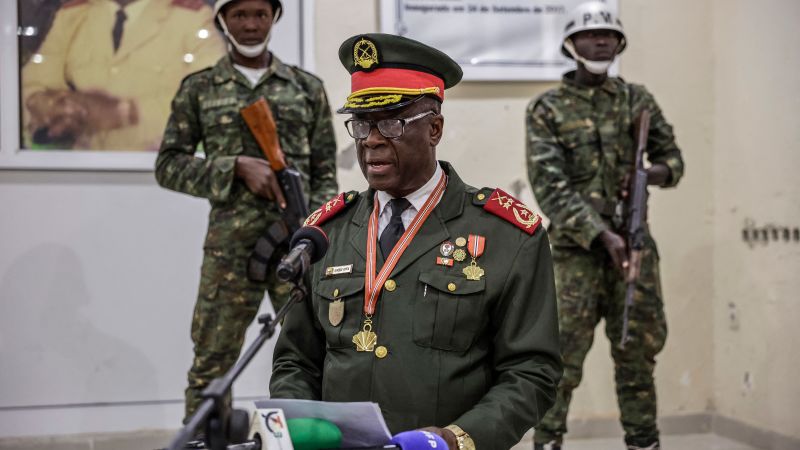
 CNN
CNNGeneral sworn in as transitional leader of Guinea-Bissau as ousted president arrives in Senegal

 Al Jazeera
Guinea-Bissau’s deposed President Embalo arrives in Senegal after coup
 BBC News
Guinea-Bissau army general named president a day after apparent coup
 Al Jazeera
Guinea-Bissau coup: What happened, why it matters, what happens next?
Overview
Major-General Horta Nta Na Man's military seized power in Guinea-Bissau after a disputed presidential election, ousting President Umaro Sissoco Embaló who had claimed victory.
President Embaló was ousted and arrested, then departed to Senegal amidst Bissau gunfire. A military government was installed for a one-year transition.
This coup highlights Guinea-Bissau's persistent instability, a poor nation and drug trafficking hub, having endured nine coup attempts since its 1974 independence.
This coup reflects a broader trend of military takeovers across West and Central Africa, fueled by disputed elections and political infighting in recent years.
Guinea-Bissau imposed a nighttime curfew and closed borders. The African Union condemned the coup, demanding Embaló's immediate release and respect for the electoral process.
Analysis
Center-leaning sources present this story neutrally. They focus on factual reporting of military takeovers across Africa, providing a chronological overview of events without injecting editorial opinion. The coverage highlights the sequence of coups, the actors involved, and key outcomes, maintaining an objective tone throughout, allowing readers to form their own conclusions.