White House Posts AI-Altered Photo of Arrested Activist Nekima Levy Armstrong
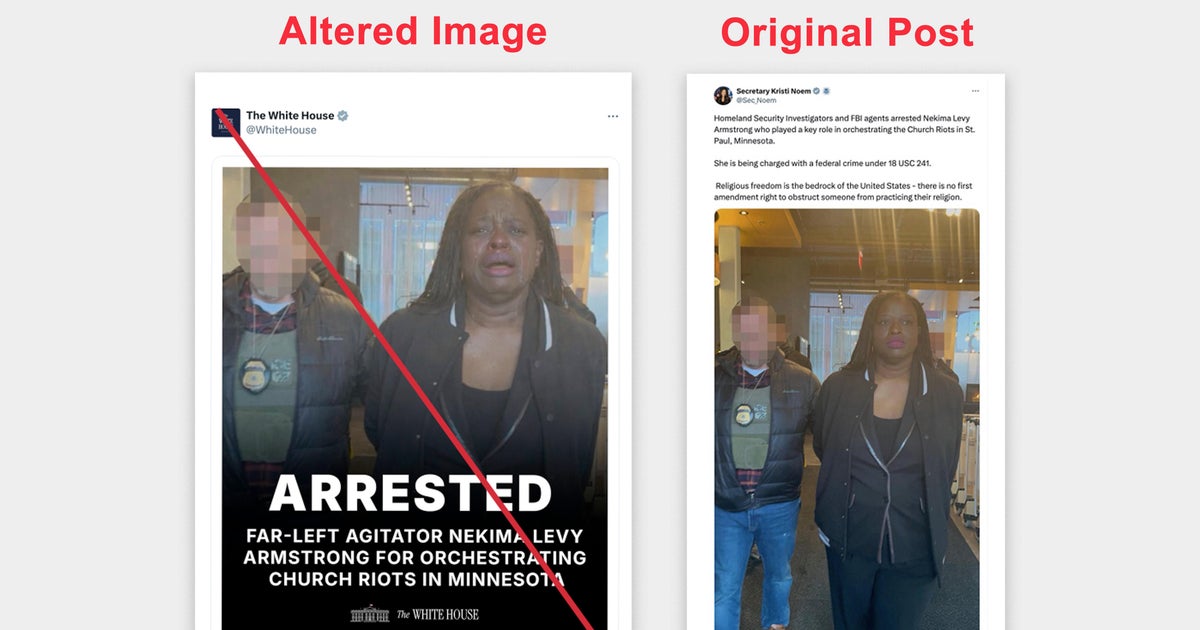
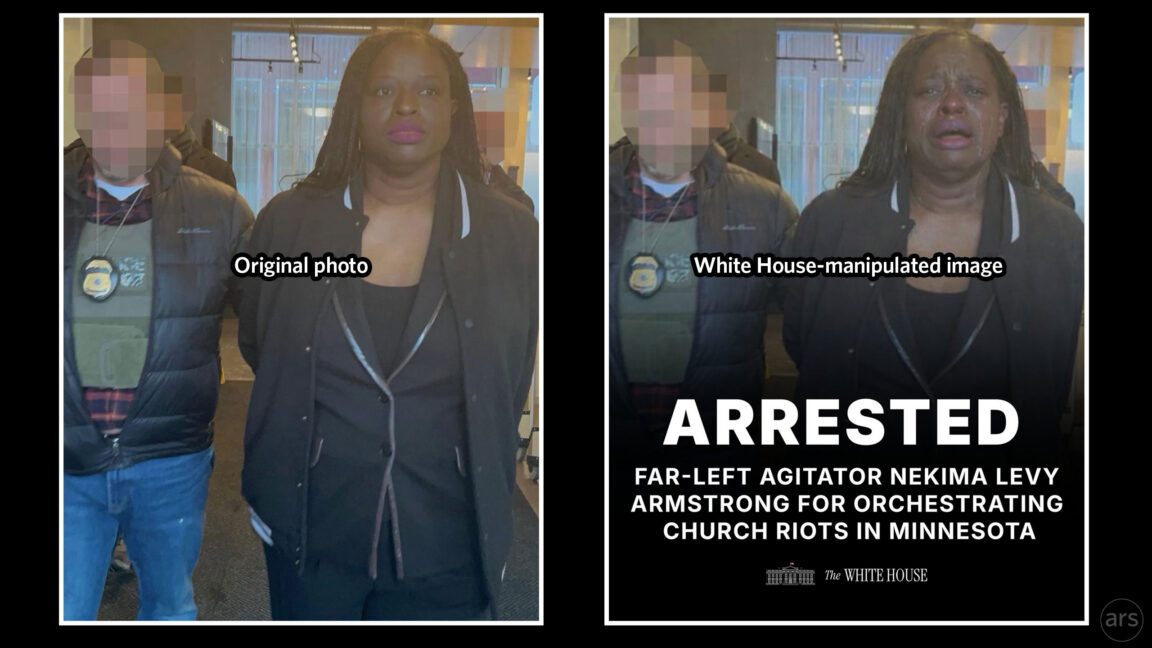
White House posted an AI-altered photo of Nekima Levy Armstrong on Jan. 22, 2026 that made her appear to be crying after DHS posted the original about 30 minutes earlier.
 CBS News
White House posts an altered photo of Minnesota protester's arrest to make it look like she was crying

 The Intercept
Google’s AI Detection Tool Can’t Decide if Its Own AI Made Doctored Photo of Crying Activist
 HuffPost
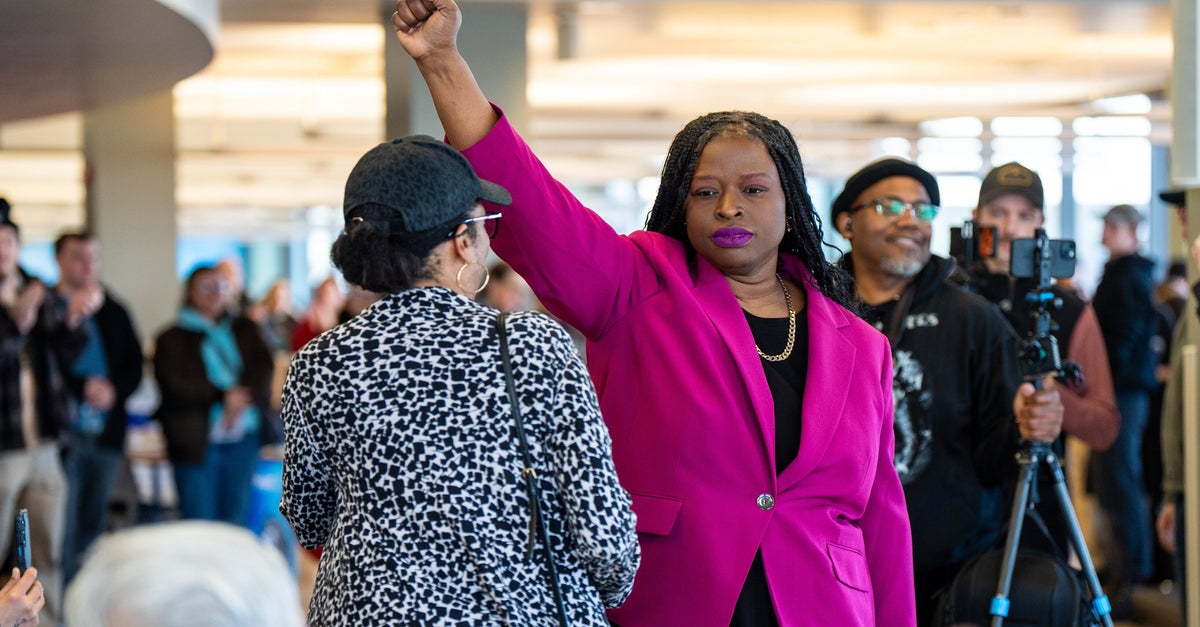
Minnesota Activist Releases Video Of Arrest After Manipulated White House Version
 ARS Technica
White House alters arrest photo of ICE protester, says “the memes will continue”
Overview
A senior White House official confirmed the administration posted an AI-altered image of Nekima Levy Armstrong on Jan. 22, 2026 that made her appear to be crying.
Secretary of Homeland Security Kristi Noem posted the original unedited photo about 30 minutes earlier and the White House account captioned the edited image calling Levy Armstrong a "far-left agitator," records show.
White House Deputy Communications Director Kaelan Dorr defended the post in an X message writing, "Enforcement of the law will continue. The memes will continue," Dorr wrote.
Three people — Nekima Levy Armstrong, Chauntyll Louisa Allen and William Kelly — were arrested on Jan. 22, 2026 in connection with a demonstration that disrupted services at Cities Church in St. Paul, and Attorney General Pam Bondi announced the arrests and said, "WE DO NOT TOLERATE ATTACKS ON PLACES OF WORSHIP," records show.
Legal analysts said the White House's posting of the altered image could be used by Levy Armstrong's defense to argue prejudicial extrajudicial statements and prompt pretrial motions, analysts said.
Analysis
Center-leaning sources frame the story as a politically motivated and manipulative act by the White House, foregrounding the altered photo and condemnations (NAACP, attorney, family), while relegating the administration’s defense to secondary placement. Language emphasizing "manipulated" imagery and selective quote placement suggests editorial skepticism of the administration’s actions.