Ancient Isle of Wight Fossils Reveal New Sail-Backed Dinosaur Species
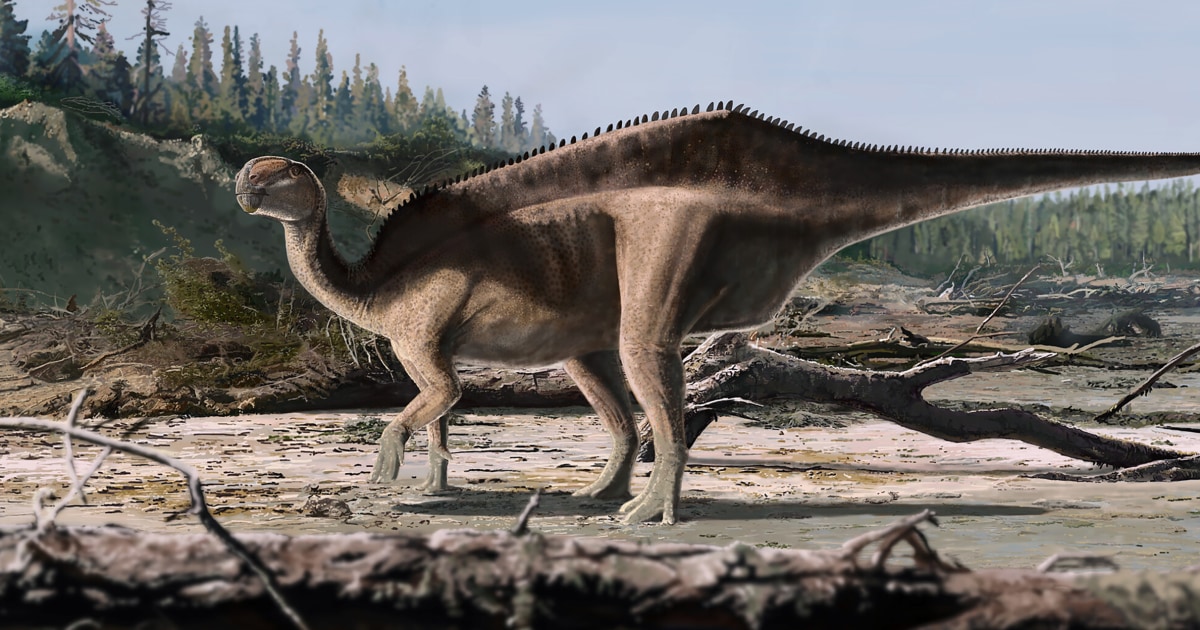
Fossils from the Isle of Wight, initially misidentified for 40 years, reveal a new sail-backed dinosaur species, announced by the Natural History Museum in London.



Overview
Fossil bones, initially believed to be known iguanodontian species, were discovered 40 years ago on the Isle of Wight, setting the stage for a significant re-evaluation.
A former PhD student identified these long-held fossils as a distinct, new dinosaur species, characterized by a unique sail-like structure on its back.
The Natural History Museum in London officially announced this groundbreaking discovery, highlighting the meticulous research that led to the reclassification of the ancient remains.
The detailed findings of this investigation, confirming the new species and its evolutionary significance, were formally published in the journal Papers in Palaeontology on August 21.
Researchers further identified broader evolutionary trends among dinosaurs possessing sail-like structures, indicating that this feature appeared in several distinct species over time.
Analysis
Center-leaning sources frame this story by sensationalizing a speculative scientific theory. The headline presents sexual selection as the definitive purpose of the dinosaur's sail, despite the article acknowledging uncertainty. This editorial choice, coupled with evaluative language and prominent quotes supporting this specific hypothesis, creates a narrative emphasizing the more provocative aspect of the discovery.