New Organic Compounds in Enceladus' Geysers Suggest Life-Supporting Conditions
Scientists reanalyzing Cassini data discovered new complex organic compounds in Enceladus' geysers, originating from its subsurface ocean. This strengthens the moon's potential to harbor extraterrestrial life.

 Boston Herald
New study adds to the possibility of favorable conditions for life at Saturn’s moon Enceladus
 PBS NewsHour
A study has found new organic molecules on Saturn's moon Enceladus. Scientists say that increases the chance it's habitable

 ABC News
Study adds to possibility of favorable conditions for life at Saturn's moon Enceladus
 Associated Press
New study adds to the possibility of favorable conditions for life at Saturn's moon Enceladus
Overview
An international team, led by Nozair Khawaja, reanalyzed ice grains from NASA's Cassini spacecraft's 2008 flyby of Saturn's moon Enceladus, revealing new insights into its composition.
The reanalysis discovered new complex organic compounds in Enceladus' geysers, confirming their origin from the moon's subsurface ocean and suggesting potential life-supporting conditions.
These new grains, significantly younger than previous findings, impacted Cassini's analyzer at 40,000 mph, a speed that improved the clarity of chemical compound analysis.
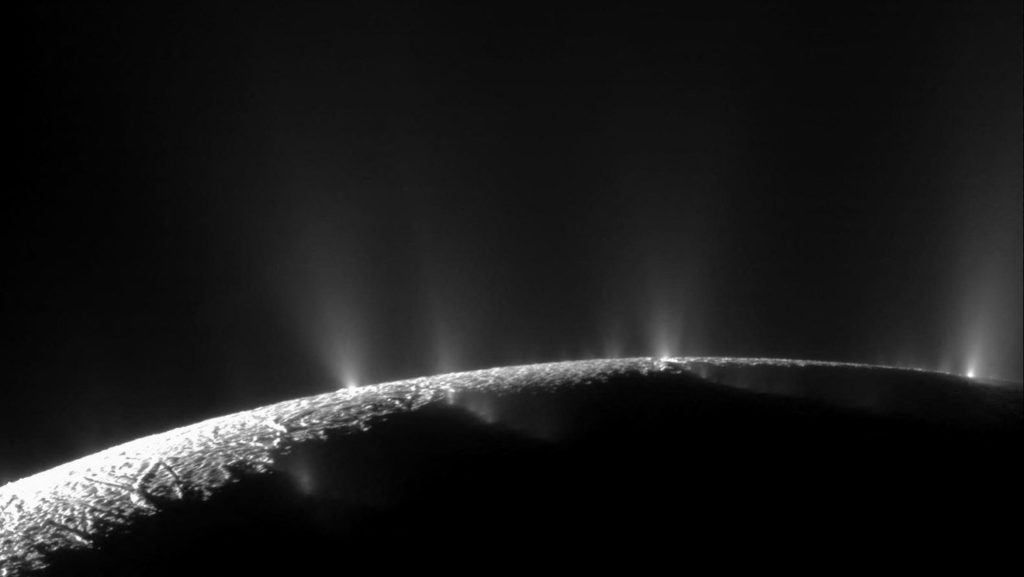
Enceladus, a small ice-covered moon with a rocky core, is now a key candidate for extraterrestrial life due to its hidden ocean and potential hydrothermal vents.
Scientists advocate for new missions to Enceladus, with ESA and China planning future landings, while NASA and ESA also target Jupiter's icy moons Europa for similar life searches.
Analysis
Center-leaning sources cover the new study on Enceladus neutrally, focusing on the scientific findings without loaded language or biased emphasis. They present the discovery of new organic molecules as bolstering habitability potential, while carefully clarifying that habitability does not equate to the presence of life, ensuring balanced reporting.