Scientists Awarded Nobel Chemistry Prize for Pioneering Gas-Trapping Molecular Structures
Susumu Kitagawa, Richard Robson, and Omar Yaghi won the Nobel Chemistry Prize for developing metal-organic frameworks. Their work on molecular structures that trap gases offers potential solutions for pollution and climate change.
 The Guardian
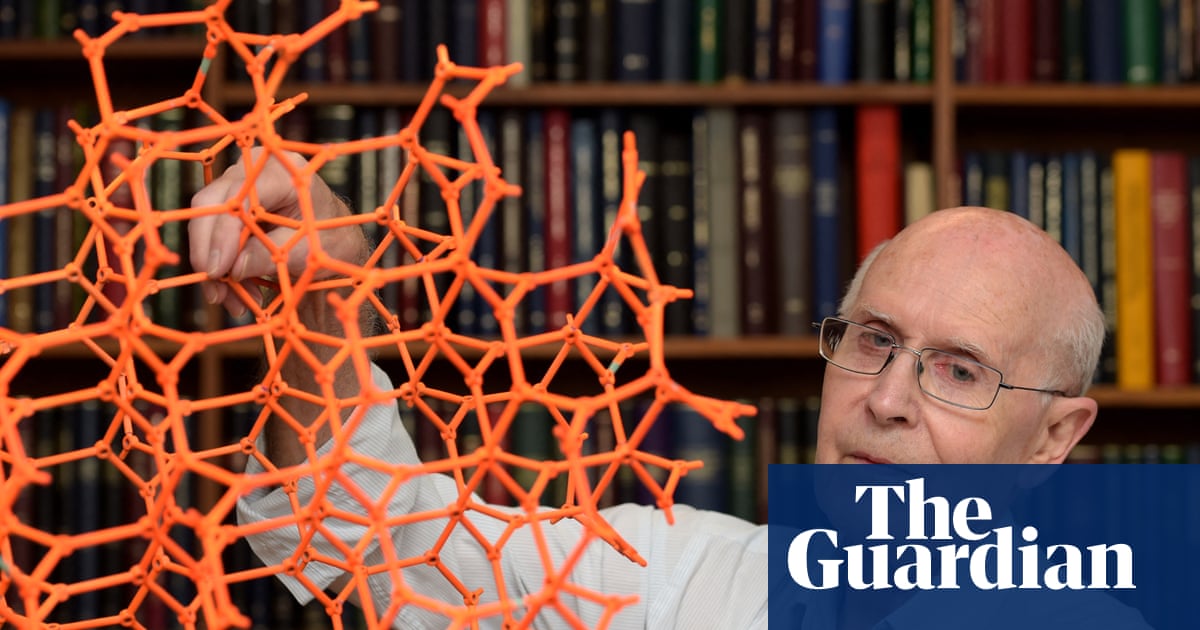
Nobel prize in chemistry awarded to scientists for work on ‘Hermione’s handbag’
 ABC News
Molecular discovery wins Nobel Prize in chemistry

 IFL Science
Nobel Prize In Chemistry Awarded For New Material Breakthrough

 NBC News
Three scientists win chemistry Nobel for 'Hermione's handbag' discovery
Overview
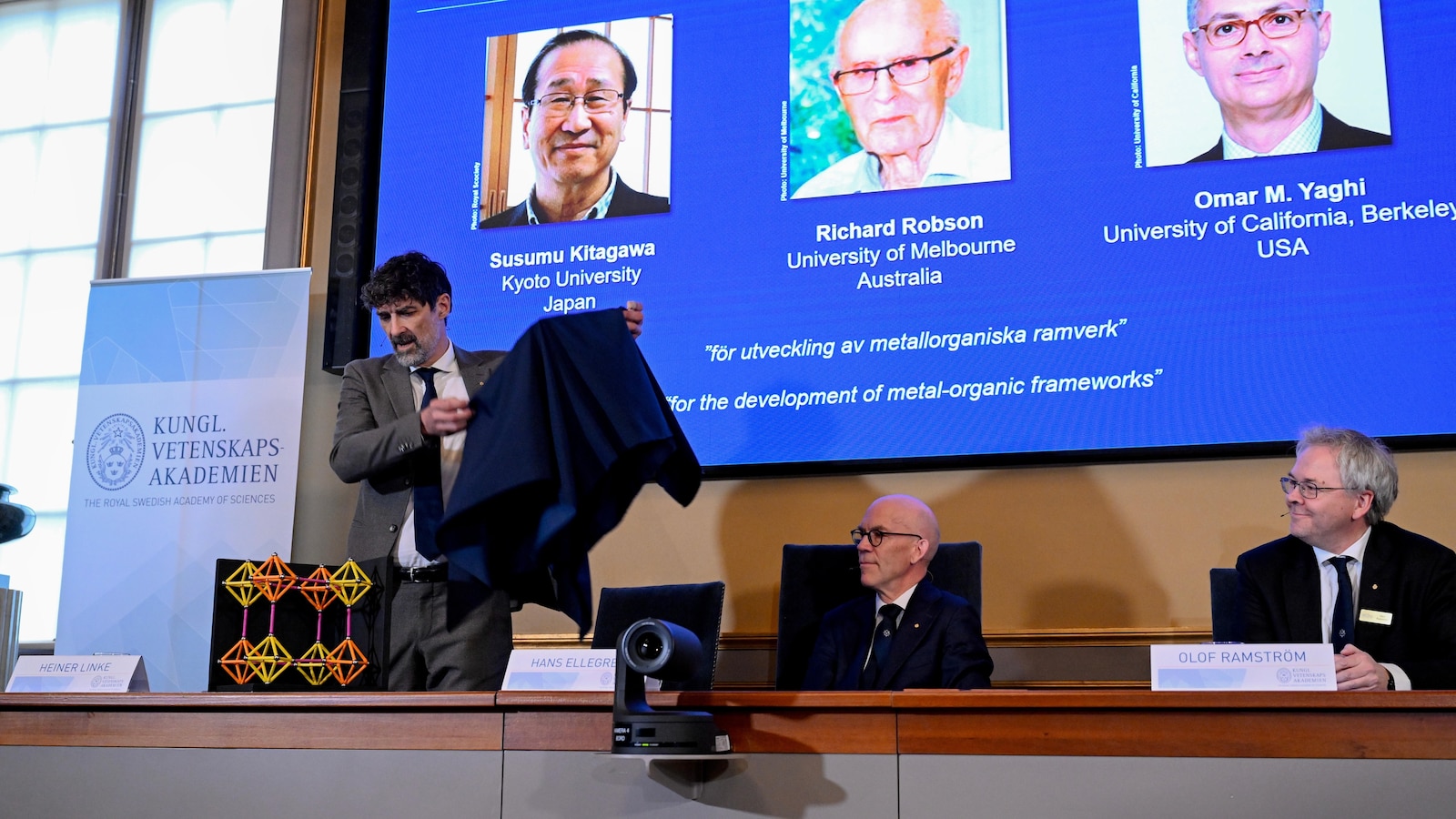
Susumu Kitagawa, Richard Robson, and Omar Yaghi were awarded the Nobel Prize in Chemistry for their pioneering work on metal-organic frameworks (MOFs), announced by the Royal Swedish Academy of Sciences.
Their research developed molecular structures capable of trapping gases like CO2 and water from the air, offering significant potential for environmental applications in pollution reduction and climate change mitigation.
The Nobel committee highlighted the frameworks' ability to separate "forever chemicals" (PFAS) from water, addressing widespread contamination that has affected air, water, and soil for decades.
The chemists independently built upon each other's breakthroughs over decades, with Robson's foundational work beginning in the 1980s, leading to the advanced molecular architectures recognized by the prize.
The three winners will equally share 11 million Swedish kronor (approximately $1.17 million USD), with the official award ceremony scheduled for December 10, commemorating Alfred Nobel's death anniversary.
Analysis
Center-leaning sources cover this story neutrally, focusing on the factual announcement of the Nobel Prize in Chemistry. They present the scientific achievement and its potential benefits by accurately reporting the Nobel Committee's statements and the winners' reactions. The reporting avoids injecting subjective language or selective emphasis, maintaining an objective and informative tone throughout.