James Watson, DNA Co-Discoverer and Controversial Scientist, Dies at 97
James Watson, Nobel laureate and co-discoverer of DNA's double-helix structure, died at 97. His work revolutionized genetics, though his career was marked by controversial remarks.




Overview
James Watson, Nobel laureate and co-discoverer of DNA's double-helix structure with Francis Crick in 1953, died at 97 in Long Island, New York, confirmed by his son.
His groundbreaking 1953 discovery, earning a 1962 Nobel Prize, revolutionized molecular biology, impacting genetic engineering, disease treatment, and forensic identification significantly.
Watson directed Cold Spring Harbor Laboratory for nearly 40 years, transforming it into a leading genetics research center and leading the Human Genome Project (1988-1992).
Despite scientific acclaim, Watson faced backlash and retired from Cold Spring Harbor in 2007 after making controversial, offensive remarks about race and intelligence.
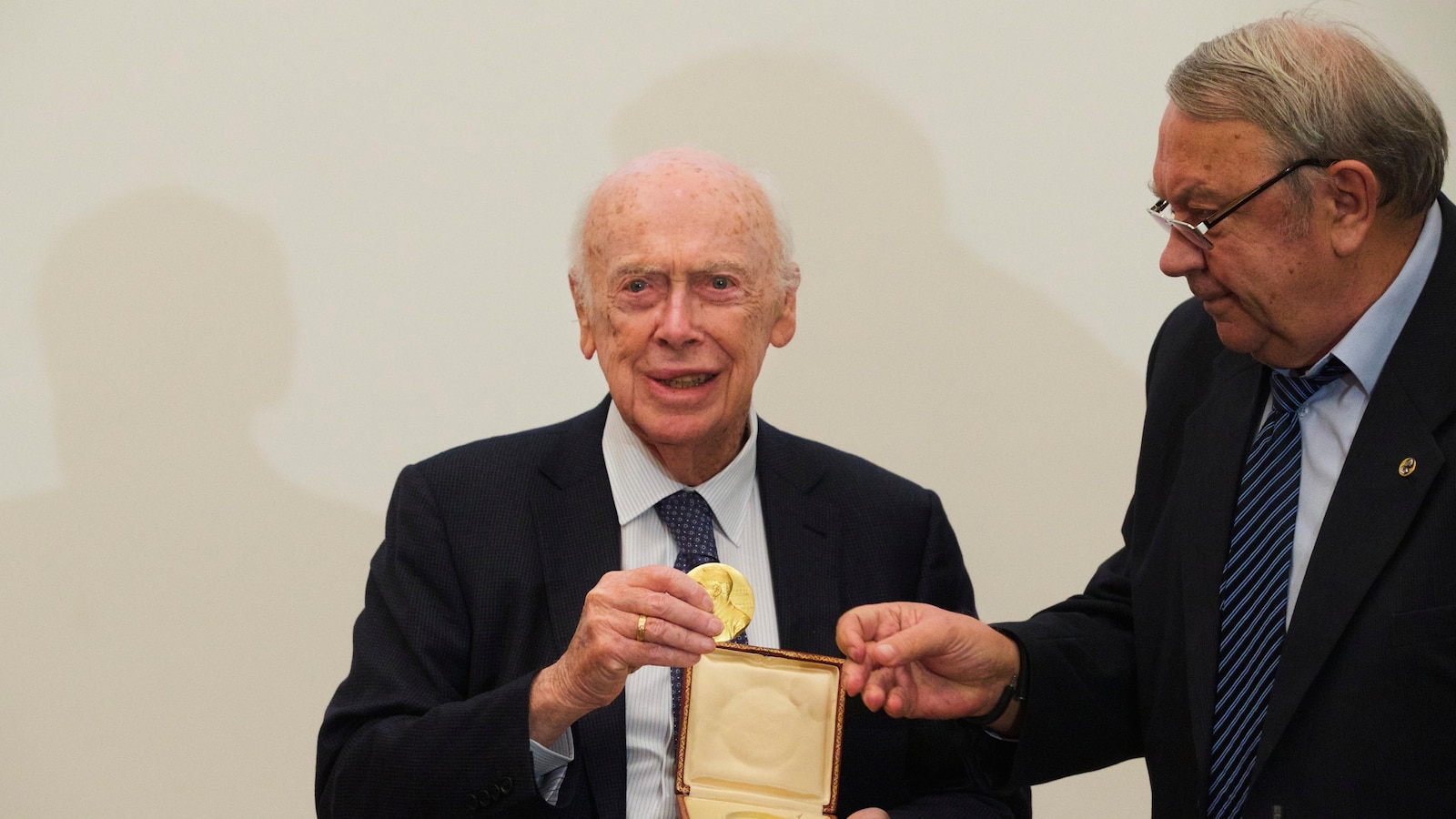
In 2014, Watson auctioned his Nobel Prize medal for a record $4.7 million to fund research, though a Russian billionaire later purchased and returned it.
Analysis
Center-leaning sources cover James Watson's death neutrally, presenting a comprehensive account of his life. They balance his monumental scientific achievements, like co-discovering DNA's structure, with his controversial comments on race and sex and the subsequent professional repercussions. The reporting avoids loaded language, focusing on factual descriptions of events and their impact.