2025 Ocean Heat Sets New Record, Scientists Say
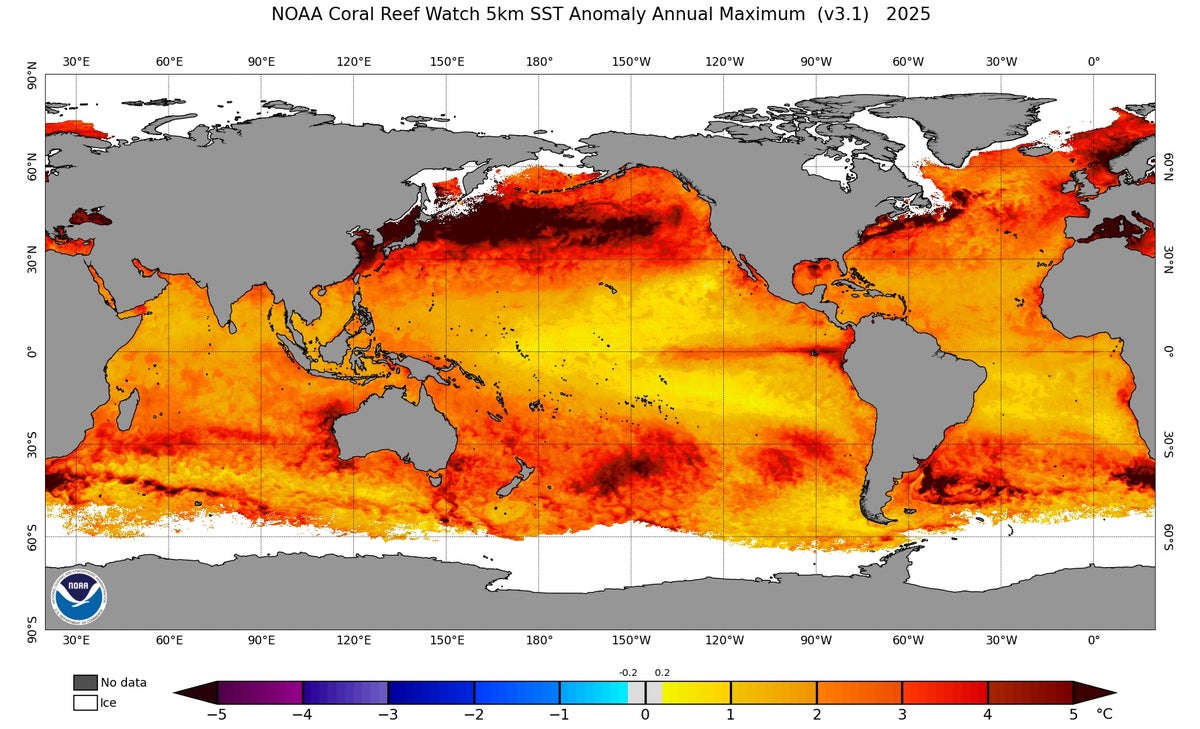
In 2025 the upper 2,000 meters of the oceans absorbed a record 23 zettajoules of heat, reshaping global climate energy balance and weather patterns worldwide.

 ARS Technica
The oceans just keep getting hotter

 Gizmodo
The Worldâs Oceans Soaked Up Record-Breaking Heat for the 9th Straight Year

 TIME Magazine
The Oceans Were Hotter Than Ever in 2025
 Scientific American
Ocean Temperatures Just Hit a Dire New Record

 Wired
WiredThe Oceans Just Keep Getting Hotter
Overview
A global team of over 50 scientists from the US, Europe and China found that in 2025 the upper 2,000 meters absorbed a record 23 zettajoules.
The 23 zettajoules equal one sextillion joules per zettajoule, enough energy to boil two billion Olympic swimming pools or about 200 times annual global electricity use.
Rising ocean heat increases atmospheric moisture and energy, contributing to intensified storms, altered precipitation and wider climate impacts that can affect regions unevenly.
Most global temperature records rely on sea-surface measurements, but scientists emphasize monitoring deeper ocean heat to understand long-term climate trends and future impacts.
Excess surface heat penetrates deeper via ocean circulation and currents; El Niño and other variability can alter surface temperatures and regional ocean heat uptake.
Analysis
Center-leaning sources frame this story by emphasizing the scientific consensus and urgency of addressing climate change. They use authoritative language, citing the report's findings and expert opinions to highlight the severity of ocean warming. The narrative is structured to underscore the link between greenhouse gas emissions and extreme weather, urging action towards net-zero emissions. This framing prioritizes scientific evidence and the need for policy change, while presenting a balanced view by acknowledging ongoing research and adaptation efforts.