NASA Team Unveils Highest-Resolution Dark Matter Map
Map uses James Webb Space Telescope images to reconstruct dark matter across nearly 800,000 galaxies via weak gravitational lensing.



Overview
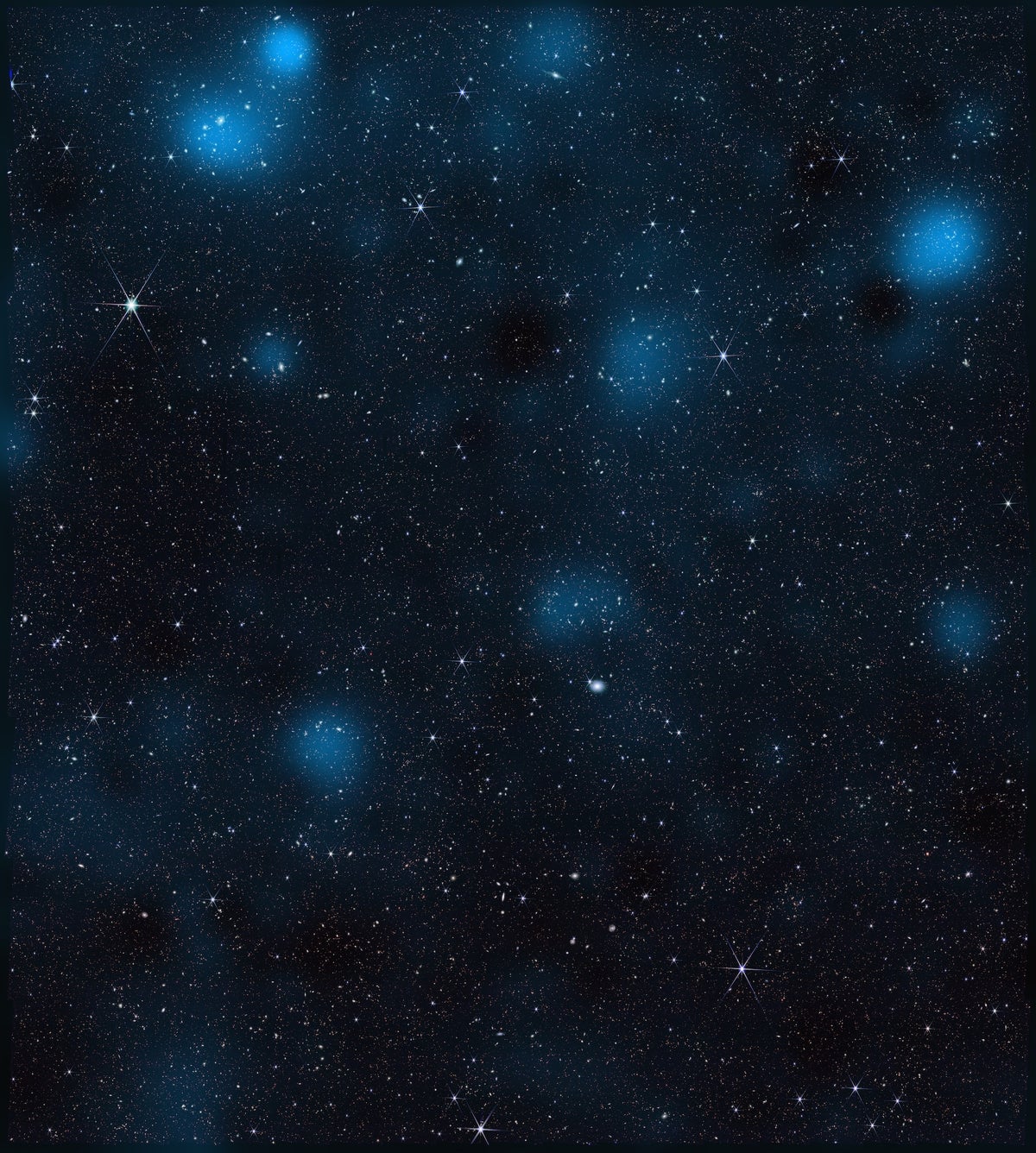
Researchers led by Diana Scognamiglio of NASA's Jet Propulsion Laboratory released the most detailed dark matter map to date using James Webb Space Telescope images, mapping nearly 800,000 galaxies, according to a study in Nature Astronomy.
The map matters because JWST data provided roughly twice the angular resolution of previous Hubble-based efforts and enabled measurements of about 129 background galaxies per square arcminute for weak gravitational lensing reconstruction, the study said.
Diana Scognamiglio, lead author and postdoctoral fellow at NASA's Jet Propulsion Laboratory, said "Now, we can see everything more clearly" when describing the map's ability to reveal dark matter's contours, the study reported.
The reconstruction traces mass back about 10 billion years and identifies new galaxy clusters and filamentary strands of dark matter that researchers say form the universe's large-scale scaffolding, the paper said.
The team said it will attempt to infer distances to the structures to build three-dimensional mass maps and to scale the technique using data from ESA's Euclid mission and NASA's Nancy Grace Roman Space Telescope.
Analysis
Center-leaning sources present a celebratory, progress-focused frame: they foreground researcher statements and vivid metaphors (e.g., 'scaffolding of the universe'), deploy evaluative adjectives ('highest-resolution', 'exceptional resolution'), and prioritize future promise over critique by omitting independent skepticism or methodological caveats, producing an optimistic narrative of scientific advancement.