Typhoon Kalmaegi Unleashes Deadly Devastation Across Central Philippines
Typhoon Kalmaegi devastated central Philippines, killing at least 52 and displacing hundreds of thousands. Severe flooding, infrastructure damage, and a fatal helicopter crash mark its impact.
 BBC News
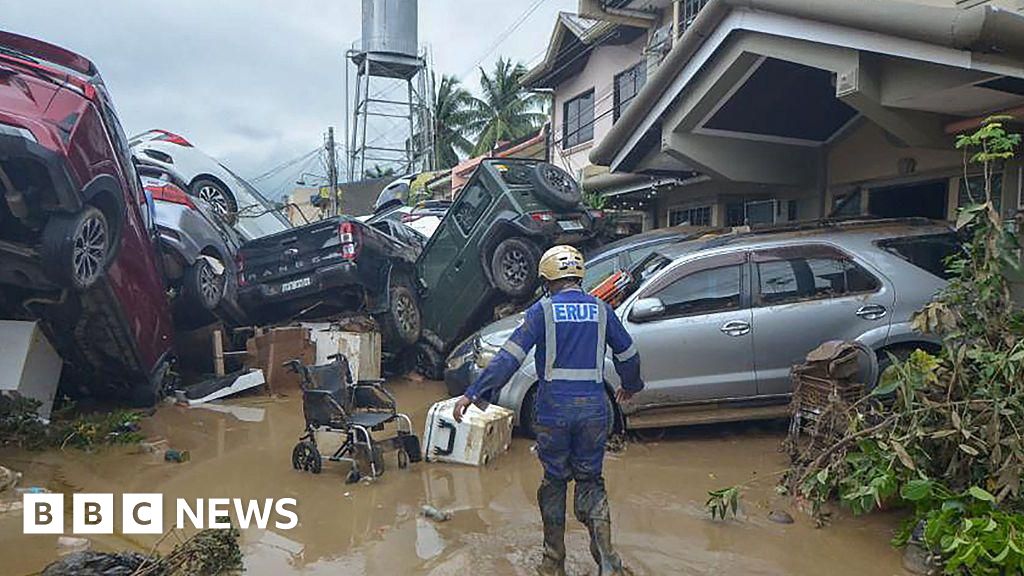
Typhoon Kalmaegi: At least 52 killed in the Philippines as storm wreaks havoc
 Associated Press
Typhoon Kalmaegi leaves 52 dead, mainly in Philippine province still recovering from deadly quake
:max_bytes(150000):strip_icc():focal(1429x686:1431x688)/Typhoon-Kalmaegi4-11425-b9058d2c1f1f4633a4ec86986727c9b2.jpg)
 People
At Least 40 Dead After Typhoon Causes Fatal Helicopter Crash, Leaves Flood Survivors Stranded on Rooftops
 Newsmax
Typhoon Kalmaegi Leaves 52 Dead, Mainly in Philippine Province Still Recovering from Deadly Quake
Overview
Typhoon Kalmaegi caused widespread devastation across the central Philippines, resulting in at least 52 deaths and 13 missing, forcing hundreds of thousands to evacuate due to severe flooding and destructive winds.
Regions like Cebu, Southern Leyte, and Bohol experienced severe flooding, submerged towns, and multiple fatalities from drowning or falling debris, with Cebu alone reporting at least 39 deaths.
A Philippine air force helicopter crashed during a humanitarian mission to aid affected provinces, killing six people, highlighting the perilous conditions faced by rescuers amidst the ongoing disaster.
The typhoon severely disrupted travel, stranding over 3,500 passengers due to prohibited interisland ferries and canceling 186 domestic flights, further isolating already disaster-prone regions.
Kalmaegi, the 20th cyclone this year, is expected to move into the South China Sea, potentially exacerbating recent flood devastation in Vietnam, underscoring the region's vulnerability to extreme weather.
Analysis
Center-leaning sources cover this story neutrally, focusing on factual reporting of the typhoon's impact. They provide a clear account of casualties, damage, and official responses without employing loaded language or selective emphasis. The reporting prioritizes conveying the scale of the disaster and the humanitarian situation through objective details and attributed information.