Nationwide Iranian Protests Continue Amid Internet Blackouts, Market Closures and Rising Death Toll
Nationwide, largely leaderless protests in Iran face internet and phone outages, violent clashes, market closures and at least 39 deaths amid economic and political crisis.
 Washington Examiner
Iran reportedly cuts internet as anti-government protests swell: What to know

 TechCrunch
Internet collapses in Iran amid protests over economic crisis

 Boston Herald
Protests erupt in Iran’s capital after exiled prince’s call; internet cuts out soon after

 New York Daily News
Protests erupt in Iran’s capital after exiled prince’s call; internet cuts out soon after
Overview
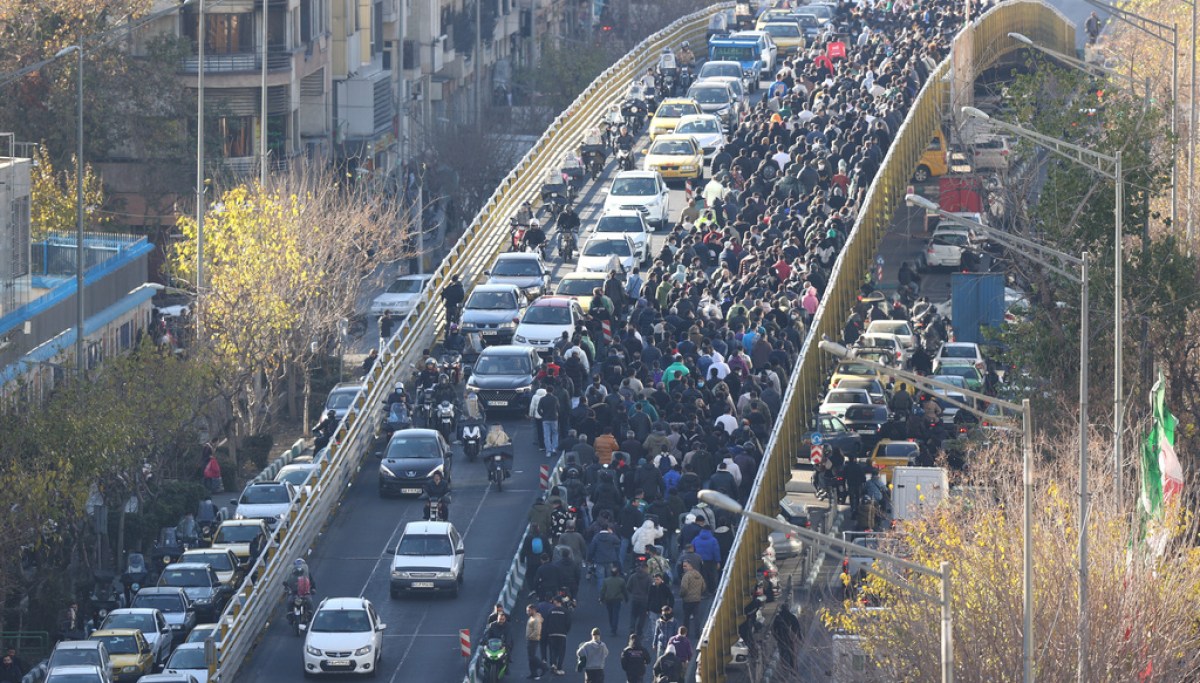
Iranians nationwide staged largely leaderless demonstrations starting Wednesday and continuing Thursday, with exiled Crown Prince Reza Pahlavi urging evening rallies that tested his influence.
Protests spread across Tehran, Shiraz, Bojnourd, Kerman, Kermanshah, Lordegan, Kurdistan markets and rural towns, prompting market and bazaar closures in solidarity.
Authorities cut internet and phone access, with CloudFlare and NetBlocks attributing outages to government interference and Dubai-Iran phone lines reportedly down.
Rights groups report at least 39 killed and over 2,260 detained; incidents include a police colonel stabbed near Tehran and attacks killing multiple security personnel.
Economic collapse—rials at roughly 1.4 million per dollar—and long-standing grievances over theocracy and repression fuel unrest that intensifies pressure on Iran's civilian government and Supreme Leader.
Analysis
Center-leaning sources frame the story by emphasizing the scale and intensity of the protests, highlighting the government's internet restrictions as a tool to suppress dissent. They use terms like "nationwide blackout" and "digital censorship" to underscore the regime's control tactics. The narrative is structured to show the protests as a significant challenge to the Iranian government, with a focus on the potential for escalation and international implications, such as U.S. responses and historical context of past protests.