Russia Reacts to U.S. Push for Greenland With Glee and Wariness
Russian officials, state media and pro‑Kremlin commentators praised U.S.-European tensions over Greenland while warning of Arctic security and economic risks.
 The Guardian
Trump news at a glance: at Davos, president rambles, backs down and touts ‘future deal’ on Greenland
 BBC News
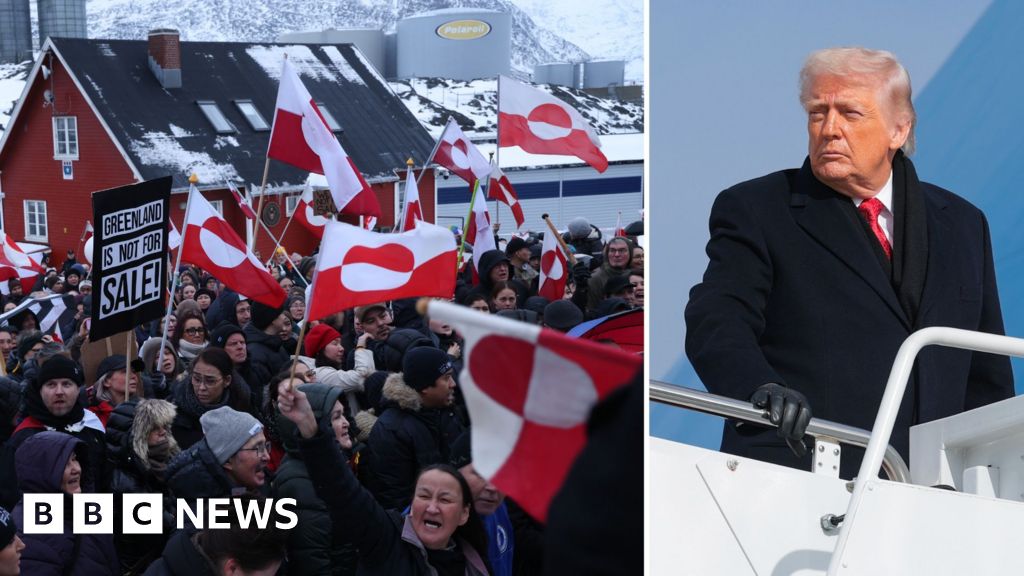
Greenland: US allies won't soon forget crisis triggered by Trump
 FOX News
Top NATO official reveals details of stunning meeting with Trump that produced Greenland deal 'framework'
 The Guardian
Trump’s claim of forthcoming deal with Nato over Greenland is ‘not real’, Danish lawmakers say – live
Overview
LEAD: Russian officials, state-backed media and pro‑Kremlin bloggers responded this week to President Donald Trump's Jan. 21, 2026 Davos call to "get Greenland" with a mix of glee and wariness, and Kremlin spokesman Dmitry Peskov said on Jan. 19, 2026 that "if Trump takes control of Greenland he will go down in history," according to his remarks.
CONTEXT: The responses followed Trump's Jan. 21, 2026 speech in Davos in which he sought "immediate negotiations" to acquire Greenland, reiterated he would not use military force and threatened 10% tariffs starting Feb. 1, 2026 and rising to 25% on June 1, 2026, according to his remarks and White House statements.
RESPONSE: Foreign Minister Sergey Lavrov said at a Jan. 20, 2026 news conference that Denmark's control over Greenland is a vestige of colonialism and drew parallels between Trump's bid and Russia's 2014 annexation of Crimea, and other Russian figures including former president Dmitry Medvedev and pro‑Kremlin commentators offered both praise and caution, according to their public remarks and social media posts.
SCALE: European Parliament trade committee chair Bernd Lange announced on Jan. 21, 2026 that the EU would pause work to ratify the Turnberry trade deal with the United States, EU officials said on Jan. 22, 2026 that coordinated responses could include retaliatory tariffs worth nearly $110 billion and deployment of the bloc's Anti‑Coercion Instrument, and U.S.-EU goods and services trade totaled $1.5 trillion in 2024, U.S. Trade Representative data show.
FORWARD: Trump is scheduled to hold bilateral meetings with more than 60 heads of state at Davos and to host an event on Jan. 22, 2026 while EU leaders plan to meet on Jan. 22, 2026 to consider retaliation, and the U.S. tariffs are set to take effect on Feb. 1, 2026 unless the administration changes course, White House and EU officials said.
Analysis
Center-leaning sources frame the story as a Trump gaffe that undercuts competence, using evaluative wording ('appeared to confuse,' 'mistakenly referred'), repetitive examples from the speech, and juxtaposition of the White House rebuttal with quotes showing the error. Emphasis on repetition and lead placement amplifies a narrative of carelessness.